
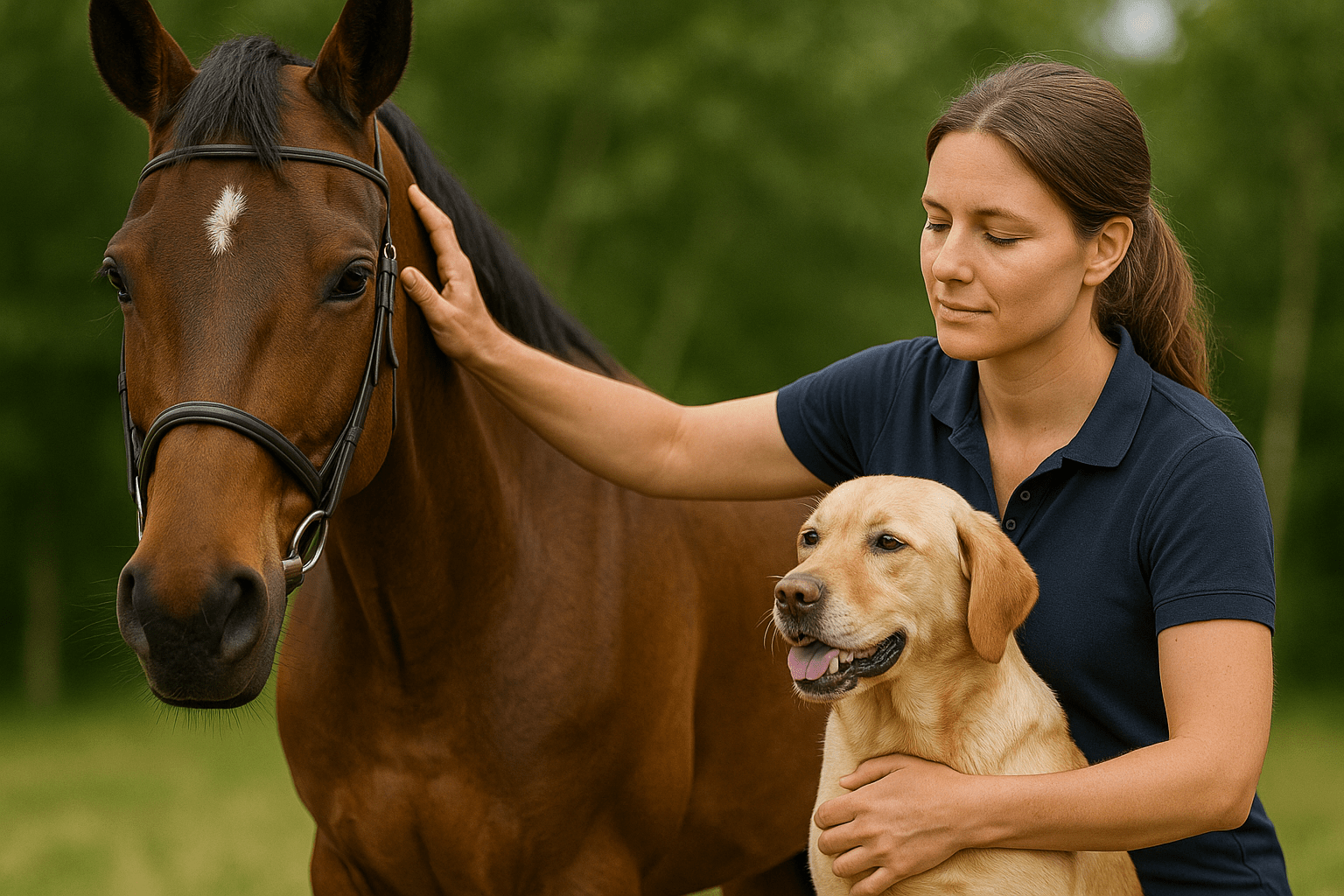
If you’ve ever had an osteopathic treatment yourself, you’ll know how much difference gentle, hands-on techniques can make to how your body feels and moves. Animal osteopathy applies the same underlying principles — recognising that structure and function are interrelated, and that when the body is in balance, it can heal and perform more effectively.
What Is Animal Osteopathy?
Animal osteopathy is a more than just a form of manual therapy, it is a system of healthcare that works with the musculoskeletal system — the bones, joints, muscles, and connective tissues — as well as the circulation and nervous system that support them. It’s based on the osteopathic philosophy that the body functions as a whole, and that restrictions in one area can affect other parts over time as well as the understanding when not impeded, the body has the ability to self-heal and self-regulate.
In practice, this means your osteopath will use observation and skilled palpation (the art of feeling with the hands) to assess how your horse or dog moves, identifying areas of tension, imbalance, or reduced mobility. Treatment then involves a range of gentle techniques such as soft tissue release, stretching, articulation, and sometimes very subtle cranial or fascial work or mobilisations — all aimed at restoring natural motion and supporting the animal’s own ability to adapt and heal. The key is to work with the animal, not to enforce treatment upon the animal.
How Can Osteopathy Help?
Just like people, animals can develop stiffness, muscle tension, or joint restrictions from their day-to-day activities. Horses may experience unevenness under saddle, reluctance to bend or canter on one rein, or changes in behaviour such as tail-swishing or resisting contact. Dogs might show signs like difficulty jumping into the car, slowing down on walks, or becoming grumpy when touched along the back.
These issues can arise for many reasons — conformation, repetitive strain, old injuries, or simply the physical demands of training and play. By addressing these underlying mechanical imbalances, osteopathic treatment can help to:
- Improve flexibility and range of motion
- Enhance performance and comfort under saddle or during activity
- Support recovery after injury or surgery
- Reduce compensatory strain elsewhere in the body
- Promote general well-being and relaxation
Many owners also notice improvements in temperament and willingness. When movement feels easier, behaviour often follows.
A Whole-Body Approach
One of the key distinctions of osteopathy is its holistic approach. Rather than focusing only on the area of discomfort, the osteopath looks at how the whole-body functions together. For instance, a dog with a shoulder strain might actually be compensating for stiffness in the opposite hip, while a horse resisting the right rein could have tension originating from the poll or pelvis.
By finding and addressing these patterns, the osteopath aims not just to relieve symptoms, but to restore overall balance and coordination. This helps reduce the likelihood of recurring problems and supports long-term soundness.
Working Alongside Your Vet
Animal osteopaths always work in partnership with veterinary professionals. In the UK, it is a legal requirement that all animals with an underlying condition and/or requiring remedial care receive veterinary consent before osteopathic treatment. This ensures that any underlying medical conditions are properly diagnosed and that osteopathic care complements — rather than replaces — veterinary medicine.
When used as part of a multidisciplinary approach, osteopathy can be an invaluable addition to your animal’s care plan, enhancing recovery, comfort, and performance.
When to Seek Osteopathic Care
If you notice changes in your horse or dog’s movement, behaviour, or posture — or simply want to support their wellbeing as part of a proactive maintenance routine — an osteopathic assessment can be a great place to start.
Every treatment is tailored to the individual, taking into account their age, lifestyle, and health history. Whether your four-legged friend is a high-level competitor, a working animal, or a beloved companion, osteopathy offers a gentle, non-invasive way to help them move freely and feel their best.
 New Forest Animal Osteopathy