
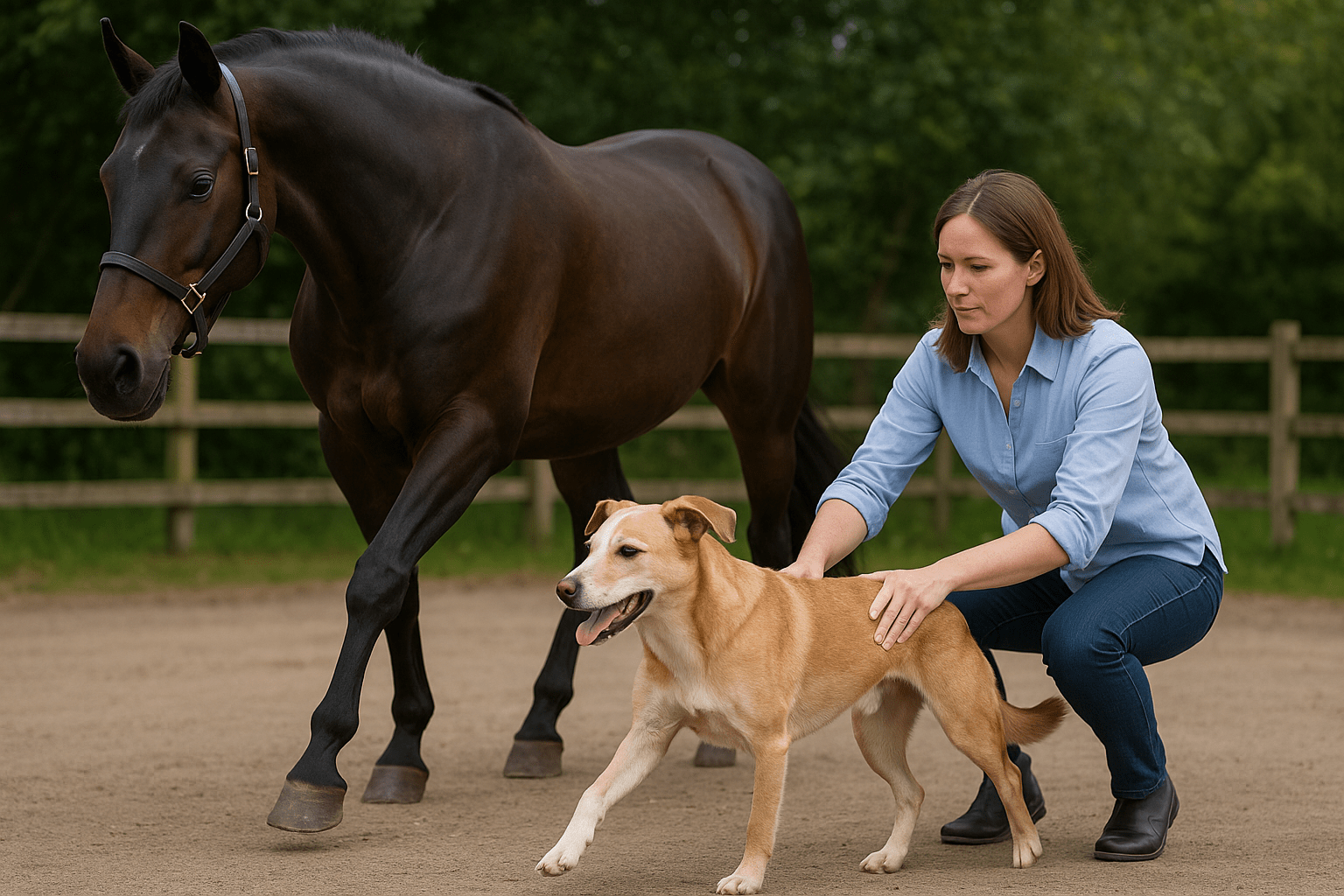
Every animal moves in its own unique way, but when something doesn’t look quite right — a shortened stride, uneven movement, or loss of power — it’s often a sign that the body is compensating for an underlying restriction or discomfort. These subtle changes can creep in gradually, making them easy to overlook until performance, comfort, or behaviour start to change.
Osteopathy offers a gentle, holistic approach to understanding and improving how your horse or dog moves, helping restore natural rhythm and balance.
Recognising Gait and Movement Problems
Movement issues can present differently depending on the animal and their activities.
In horses, owners and riders might notice:
- Reluctance to bend or work evenly on both reins
- Uneven stride length or “shortness” on one side
- Difficulty maintaining canter leads
- Changes in head carriage or tail swishing
- Resistance when being tacked up or mounted
In dogs, movement problems often show up as:
- Stiffness when getting up after rest
- A tendency to “bunny hop” or carry weight unevenly
- Reluctance to jump, climb stairs, or get into the car
- Shortened stride or limping after exercise
- Subtle behavioural changes such as irritability or withdrawal
While these signs don’t always point to a serious problem, they do indicate that the animal’s body is working harder to compensate somewhere — and that’s where osteopathy can help.
How Osteopathy Approaches Gait Issues
Osteopathy looks beyond the visible symptoms to find the root cause of dysfunction. Your osteopath will start by taking a detailed history and observing your animal’s movement — this might include in hand, during free movement or performing specific activities, depending on what’s appropriate. They’ll then use skilled palpation to assess how the joints, muscles, and fascia are moving and how well the body is compensating.
For example, a horse showing uneven movement behind might be protecting an old pelvic injury, or a dog with a shortened front stride could be compensating for tightness through the spine or shoulders. Osteopathic treatment works to release these restrictions, restore joint mobility, and rebalance muscular tension, helping the body move more efficiently again.
The Benefits of Osteopathic Treatment
By gently improving mobility and symmetry throughout the body, osteopathy can:
- Enhance performance – improving stride length, suppleness, and power
- Reduce risk of injury – by preventing overload on compensating structures
- Aid recovery – following strain, injury, or surgery
- Improve comfort – making movement smoother and less effortful
- Support longevity – helping maintain healthy biomechanics as animals age
Many owners notice improvements not only in movement but also in their animal’s demeanour and confidence. When the body feels freer, the mind often relaxes too.
Working With the Whole Body
An important osteopathic principle is that the body functions as a unit — meaning that restriction in one area can influence movement elsewhere. A dog with tightness in the lumbar spine might load more heavily through the front legs; a horse with uneven shoulders might develop tension in the neck or sacroiliac area to compensate.
Osteopathy addresses these interconnections rather than treating one joint or muscle in isolation. By restoring balance across the system, it helps the animal move in a more coordinated, efficient way, reducing strain and enhancing natural athleticism.
When to Seek Help
If you notice even subtle changes in your horse or dog’s movement, behaviour, or willingness, it’s worth having them assessed before the issue becomes more pronounced. Early intervention can prevent small restrictions from turning into chronic problems.
Osteopathy works best as part of a collaborative care plan — alongside your vet, farrier, saddler, behaviourist or trainer — ensuring that all aspects of your animal’s health and biomechanics are supported.
Helping Your Animal Move Freely
Whether your horse is competing regularly, your dog is an active working or sporting partner, or you simply want to keep your companion comfortable and mobile, osteopathy offers a gentle, effective way to support natural movement. By addressing the body as a whole, it helps restore fluid, balanced motion — allowing your animal to move freely, feel better, and enjoy life to the fullest.
 New Forest Animal Osteopathy