
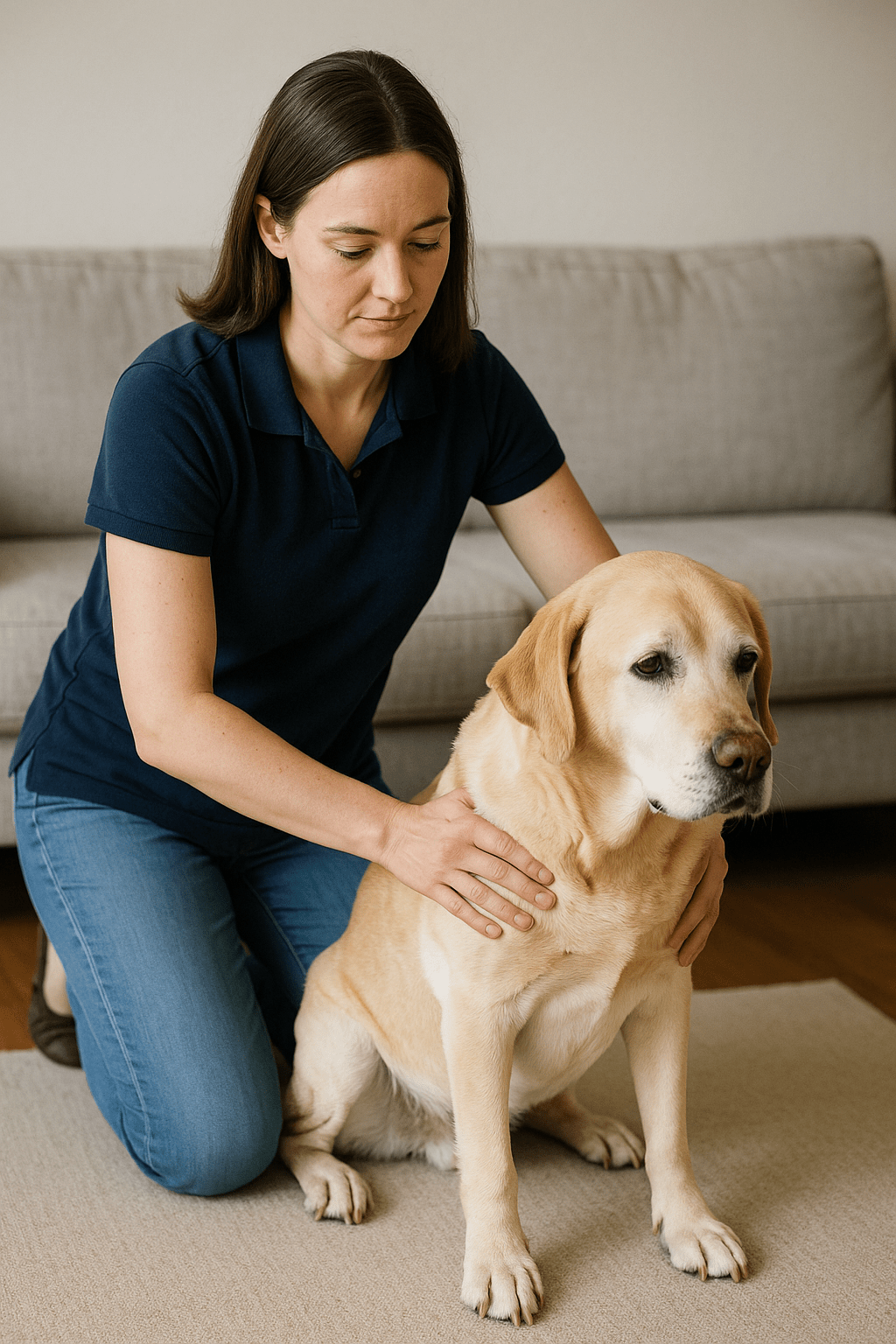
As our dogs grow older, their needs change — not just in diet and exercise, but in how their bodies move and recover from daily life. You might notice that your once-springy companion now takes a little longer to get up in the morning, tires more easily on walks, or prefers shorter play sessions.
Ageing is a natural process, but it doesn’t have to mean discomfort or loss of quality of life. Osteopathy offers a gentle, supportive way to help senior dogs stay mobile, comfortable, and content in their later years.
Understanding the Ageing Body
As dogs age, their musculoskeletal system undergoes gradual changes. Joints can become stiffer as cartilage wears down, muscles lose some elasticity and strength, and circulation may not be as efficient as it once was. Old injuries, arthritis, or compensatory habits formed over years can all contribute to reduced flexibility and mobility.
These changes can affect not just physical movement, but also how a dog feels emotionally and behaviourally. A dog that’s in discomfort might become quieter, grumpier, or less sociable — small shifts that owners often put down to “just getting old.” In reality, these signs can often be eased with the right kind of care and support.
How Osteopathy Can Help
Osteopathy for senior dogs focuses on maintaining mobility, reducing discomfort, and improving overall wellbeing. Because treatments are gentle and non-invasive, they’re well-suited to older animals who may not tolerate more vigorous therapies.
Using techniques such as soft tissue release, articulation, and gentle fascial or cranial work, the osteopath helps to:
- Improve joint mobility and flexibility
- Enhance blood flow and lymphatic drainage
- Reduce muscular tension and compensatory strain
- Support balance and coordination
- Promote relaxation and better sleep
By encouraging freer movement and better circulation, osteopathic treatment helps the body’s natural self-regulatory systems work more effectively. This often leads to noticeable improvements in how the dog moves, rests, and interacts.
Recognising When Your Older Dog May Benefit
Many owners seek osteopathic care for their senior dogs after noticing subtle changes, such as:
- Stiffness when getting up from rest
- Reluctance to go on longer walks or climb stairs
- Difficulty jumping into the car or onto furniture
- Favouring one side when lying down
- Behavioural shifts like irritability or withdrawal
These signs often reflect the body’s attempt to compensate for discomfort or restricted movement. Osteopathic assessment can identify where those restrictions lie and help ease the strain before it leads to further imbalance or pain.
A Holistic, Supportive Approach
One of the strengths of osteopathy is its holistic view of the body. Instead of focusing only on an arthritic joint or tight muscle, your osteopath considers how the whole system is functioning — from the spine and pelvis to the limbs and even the soft tissues supporting internal organs.
For example, a dog with stiffness in the hindquarters may begin to overload the front limbs, leading to tight shoulders or neck strain. By addressing these interrelated patterns, osteopathy helps restore smoother, more balanced movement throughout the body.
Working as Part of a Care Team
Osteopathic treatment for older dogs always works best as part of a collaborative care plan. Your osteopath will seek veterinary consent in the cases of remedial care before treatment and will communicate closely with your vet if there are concerns about arthritis, neurological changes, or other age-related conditions.
In many cases, osteopathy complements medication, physiotherapy, and lifestyle adjustments — providing a hands-on, comfort-focused element that supports both physical and emotional wellbeing.
Supporting Quality of Life
Owners often describe their dogs seeming “younger” after osteopathic treatment — moving more freely, engaging more on walks, or showing renewed interest in play. While osteopathy can’t stop the ageing process, it can help to make that process far more comfortable, keeping your dog active and happy for longer.
Regular check-ins, even just a few times a year, can make a significant difference to how your dog feels and moves. Combined with appropriate exercise, good nutrition, and a warm, supportive home environment, osteopathy helps older dogs continue to enjoy life with ease and vitality.
 New Forest Animal Osteopathy