
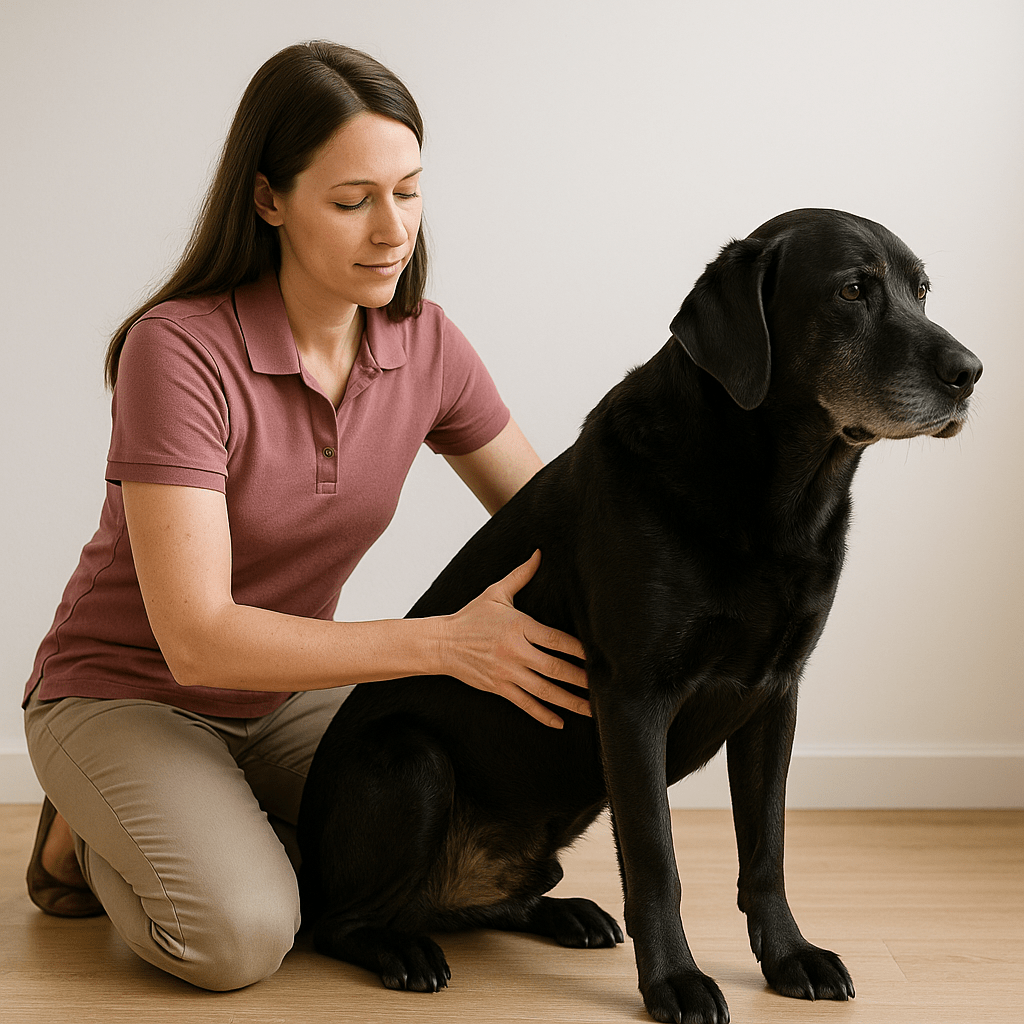
Back pain isn’t just a human problem — our dogs can suffer from it too. One of the more common sources of spinal discomfort in dogs, particularly as they get older or more active, is lumbosacral disease.
This condition can range from mild stiffness to significant nerve compression, and while it can sound worrying, early recognition and appropriate care, including osteopathic support, can make a big difference to a dog’s comfort and quality of life.
What Is Lumbosacral Disease?
The lumbosacral junction is where the last lumbar vertebra (L7) meets the sacrum, at the base of the spine just above the tail. It’s a key point of movement and load transfer between the spine and hindquarters, responsible for much of the power generated when a dog runs, jumps, or climbs.
Over time, or through injury or repetitive strain, the structures in this region; including joints, discs, ligaments, and surrounding soft tissues; can become inflamed or compressed and can cause the nerves passing through the area (especially the sciatic nerve) to be affected. This issue is known as lumbosacral disease or lumbosacral stenosis.
Which Dogs Are Most at Risk?
Lumbosacral disease is more common in:
- Active working or sporting breeds, such as German Shepherds, Labradors, Border Collies, and Spaniels
- Older dogs, where natural wear and tear has occurred
- Dogs with long backs or weaker cores, such as Dachshungs and some crossbreeds
- Animals that have had previous pelvic or spinal injuries
However, any dog can develop the condition, especially if their activities place repeated strain on the lower back and hind limbs.
Common Signs and Symptoms
Because the lumbosacral area connects the spine to the hind limbs, the signs of dysfunction can appear in several ways. Owners might notice:
- Difficulty jumping into the car or onto furniture
- Reluctance to climb stairs or go for longer walks
- Weakness or trembling in the back legs
- Stiffness after rest that improves with gentle movement
- A tucked tail or reluctance to wag
- Changes in gait — shorter hind stride or dragging toes
- Yelping when rising or being touched over the lower back
Some dogs also show subtle behavioural changes, such as becoming quieter, withdrawn, or less keen to play.
If your dog shows these signs, it’s important to consult your veterinarian first to rule out or confirm the diagnosis and ensure that osteopathic care can safely support recovery.
How Osteopathy Can Help
Osteopathic treatment doesn’t aim to replace veterinary care, but it can complement it by improving comfort, flexibility, and function around the affected region.
When the lumbosacral area is irritated, the surrounding muscles often tighten to protect it, which can restrict movement and increase strain on nearby joints — like the hips and thoracic spine. Over time, this creates compensatory tension throughout the body.
An osteopath can help by using gentle techniques to:
- Ease muscular and fascial tension around the lower back, pelvis, and hind limbs
- Encourage mobility in the spine and hips, helping reduce compensatory strain
- Support circulation and lymphatic flow, aiding tissue repair
- Promote relaxation, reducing pain and improving overall comfort
Treatment is always tailored to the individual dog’s condition, age, and tolerance level, and is carried out with veterinary consent.
A Whole-Body Approach
One of the strengths of osteopathy lies in viewing the dog’s body as a connected system. A restriction in the lumbosacral area doesn’t just affect the back — it changes how the entire body moves. Dogs may shift more weight to the front limbs, overuse their shoulders, or tighten through the neck and thoracic spine.
By addressing these secondary compensations, osteopathy helps the dog move more evenly and comfortably, supporting long-term balance and reducing the risk of further strain.
Working with Your Vet and Managing at Home
Most dogs with lumbosacral disease benefit from a multidisciplinary approach — involving your vet, osteopath, and possibly physiotherapist or hydrotherapist.
At home, you can help by:
- Keeping your dog’s weight in a healthy range
- Providing non-slip flooring and ramps to reduce slips and jumping
- Encouraging gentle, regular movement rather than long bursts of exercise
- Maintaining core and hindlimb strength through guided exercises
- Keeping the back warm and dry, especially in colder months
Together, these measures help maintain comfort and function while slowing disease progression.
Improving Comfort and Quality of Life
Lumbosacral disease can sound daunting, but with early management and appropriate care, many dogs continue to enjoy active, happy lives. Osteopathy plays a valuable role in this process — not by forcing change, but by supporting the body’s natural ability to adapt, rebalance, and move freely again.
If your dog is showing signs of back discomfort or hind-end weakness, an osteopathic assessment (with your vet’s consent) can help uncover what’s going on and create a plan to keep your companion comfortable, mobile, and enjoying life to the fullest.
 New Forest Animal Osteopathy