
Horses rely on fine-tuned coordination, balance, and strength to perform even simple movements with grace. When these qualities begin to falter — a horse tripping more than usual, losing balance, or seeming “disconnected” in their movement — it can be worrying for any owner.
One possible cause of these symptoms is a condition known as Wobbler Syndrome, or Cervical Vertebral Stenotic Myelopathy (CVSM). While the diagnosis can sound daunting, understanding what’s happening and how osteopathic care can support affected horses can help owners take a calm, informed approach to managing the condition.
What Is Wobbler Syndrome?
Wobbler Syndrome is a neurological condition that affects the horse’s neck and spinal cord. It occurs when compression of the spinal cord in the cervical (neck) region interferes with the transmission of nerve signals between the brain and body.
This compression can result from several underlying issues, including:
- Developmental changes in young, fast-growing horses (often in large breeds such as Thoroughbreds and Warmbloods)
- Degenerative joint disease or arthritis in the neck of older horses
- Malalignment or instability between cervical vertebrae
- Trauma or congenital narrowing of the spinal canal
The result is disrupted nerve communication to the limbs — most noticeably, a loss of coordination and strength in the hindquarters.
Common Signs and Symptoms
Because Wobblers affects the nervous system, the symptoms often relate to movement and proprioception (the horse’s awareness of limb position). Owners might notice:
- Unsteady, “wobbly” movement, particularly in the hind end
- Crossing or interference of the hind limbs
- Difficulty backing up or negotiating uneven ground
- Stumbling, tripping, or dragging toes
- A loss of balance when turning or stopping
- Hind limbs standing further apart to maintain stability
- Reduced performance or reluctance to engage from behind
In mild cases, the signs may be subtle — often mistaken for laziness, poor schooling, or weakness. In more advanced cases, the uncoordinated gait can become obvious and may pose a risk of falls or injury.
Diagnosis and Veterinary Care
If Wobblers is suspected, veterinary assessment is essential. Diagnosis typically involves a neurological examination, radiographs, and sometimes advanced imaging to identify where and how the spinal cord is being compressed.
Treatment recommendations will depend on the cause and severity. In some young horses, dietary and management changes can help stabilise the condition; in older horses, medical or surgical interventions may be advised. Once your vet has made a diagnosis and provided consent, osteopathic treatment can play a supportive role in maintaining comfort and mobility.
How Osteopathy Can Help
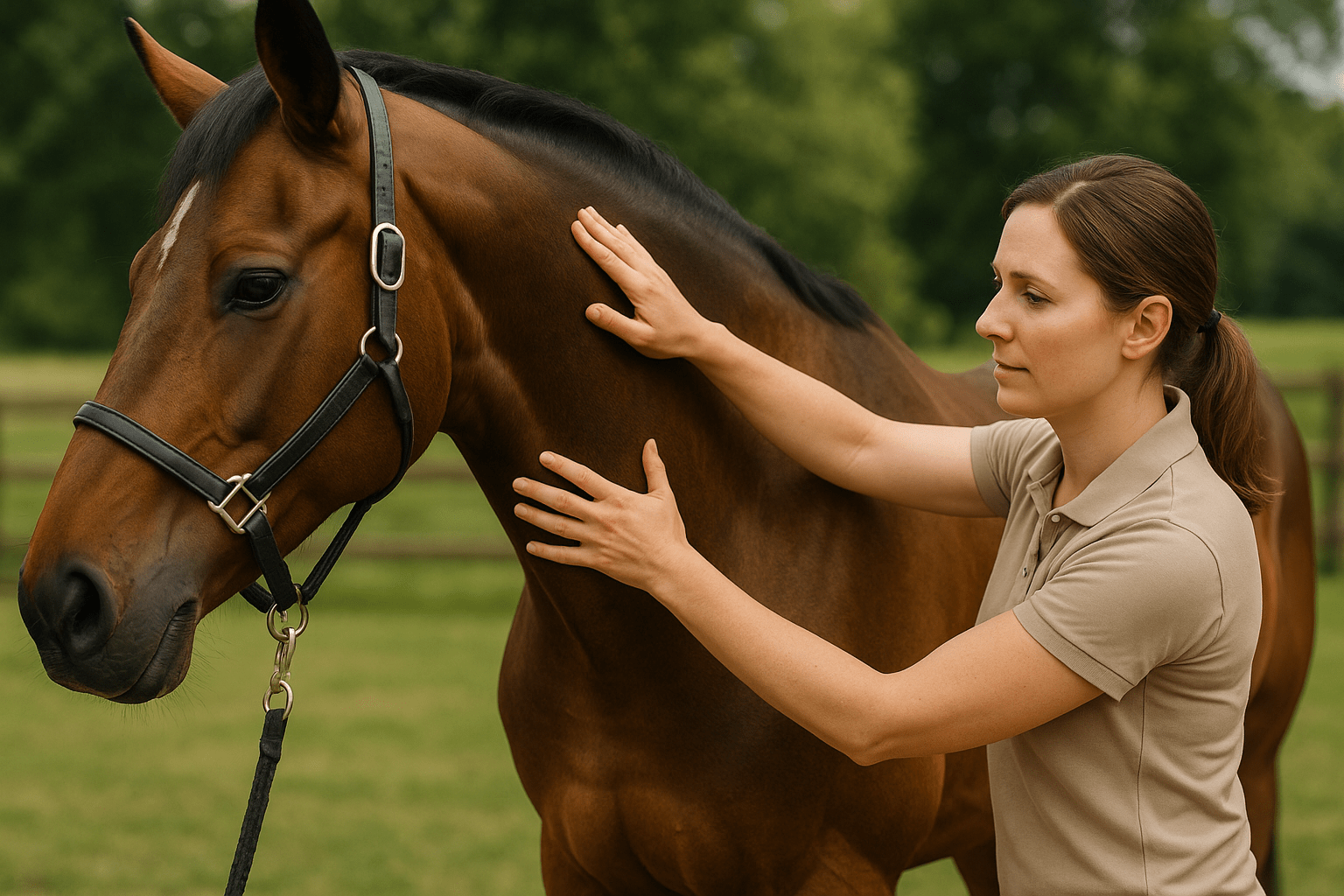
While osteopathy cannot reverse spinal cord compression, it can make a significant difference in managing secondary effects — particularly muscular tension, compensation, and postural imbalances that develop as the horse tries to adapt.
When one part of the neck becomes restricted or painful, other regions — including the shoulders, back, and pelvis — often compensate. Over time, this can lead to soreness, uneven movement, and fatigue. Osteopathic treatment works to address these secondary issues through:
- Gentle soft tissue release to reduce muscular tension and improve circulation
- Restoration of normal joint mobility where safe to do so
- Support for posture and balance, especially through the thoracic and pelvic regions
- Encouragement of better weight distribution, reducing overuse of certain limbs
This whole-body approach helps the horse move more comfortably, improves proprioceptive feedback, and supports the nervous system’s ability to function as effectively as possible within its limits.
The Holistic Perspective
In osteopathy, the spine is viewed as the central pillar of communication between the brain and the rest of the body. When this communication is disrupted, as occurs in Wobblers, it affects not only coordination but also how the rest of the body organises itself.
By working with the horse’s natural biomechanics and self-regulating mechanisms, osteopathy aims to enhance quality of movement and comfort, even in chronic or degenerative cases. Treatment is always guided by veterinary input and tailored to each horse’s needs and tolerance.
Supporting the Wobbler Horse Day to Day
Alongside osteopathic care, owners can help their horses by:
- Keeping exercise controlled and consistent, avoiding sudden turns or slippery ground
- Providing a calm, predictable environment to minimise stress and spooking
- Amending environemnt to prevent additional neck or back strain
- Encouraging gentle stretching and in-hand work to promote balance
- Maintaining good nutrition, particularly in young horses with developmental causes
Even with a neurological diagnosis, many horses live comfortably for years with thoughtful management and appropriate support.
Promoting Comfort, Balance, and Confidence
Wobblers Syndrome can be challenging, but it doesn’t always mean the end of a horse’s active life. With careful veterinary oversight, regular osteopathic support, and sensitive management, affected horses can regain confidence, move with greater ease, and enjoy a better quality of life.
Osteopathy helps these horses by working not against their condition, but with their bodies to support natural function, balance, and to help make them more comfortable.
 New Forest Animal Osteopathy