
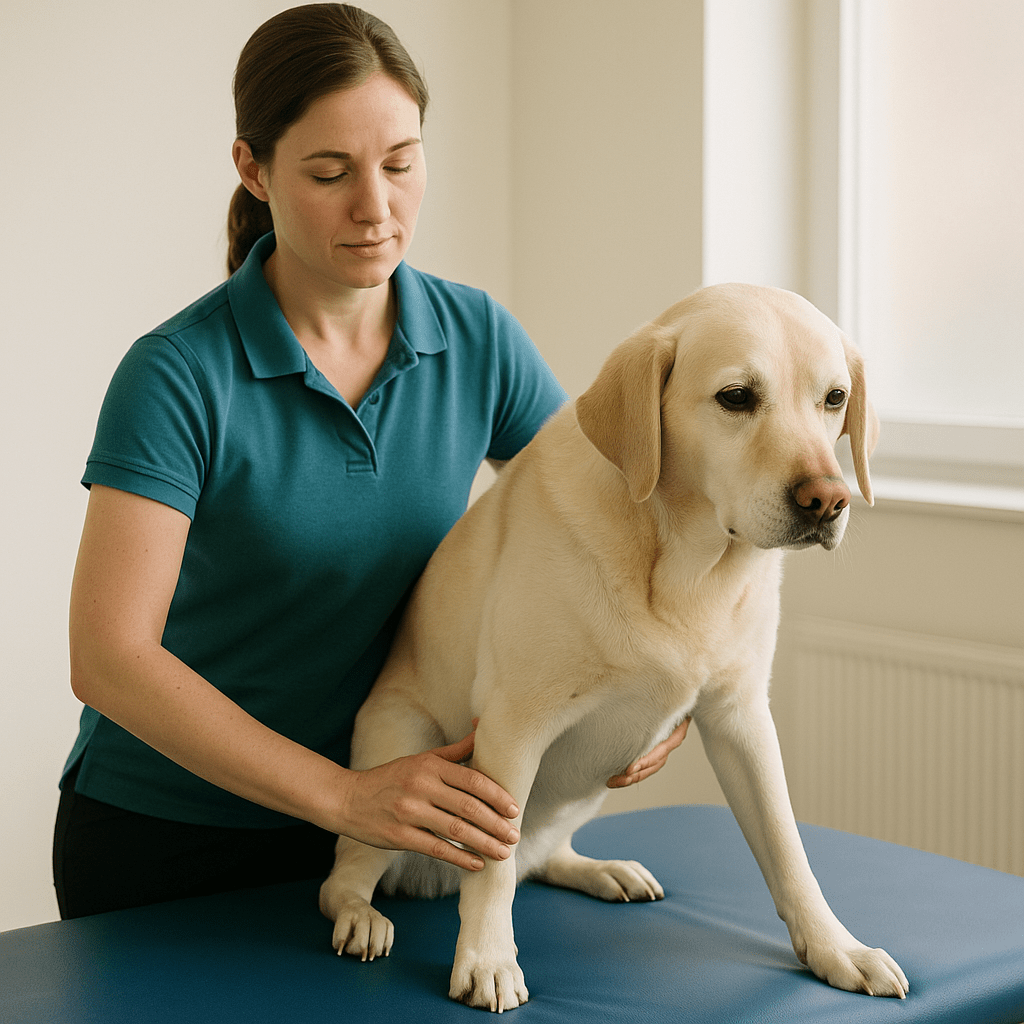
Surgery can be life-changing for a dog — whether it’s repairing a torn cruciate ligament, removing a tumour, or addressing an orthopaedic issue such as hip dysplasia. Once the operation is complete, however, recovery doesn’t end in the theatre. What happens in the days, weeks, and months afterward is just as important for ensuring the best possible outcome.
Osteopathy can play a valuable role in this phase, helping dogs regain mobility, comfort, and confidence safely and effectively.
Understanding Post-Surgical Recovery
After surgery, a dog’s body has to work hard to heal. While rest and careful management are vital, they can also lead to stiffness, muscle weakness, or compensatory strain — especially if one limb or area has been immobilised.
For example, a dog recovering from cruciate surgery will naturally offload the operated leg, leading to tension and overuse in the opposite hind limb, shoulders, and back. Similarly, spinal or abdominal surgery can cause tightness through the surrounding soft tissues, affecting movement and posture long after the incision has healed.
Post-surgical rehabilitation aims to help the body restore balance, rebuild strength, and prevent long-term compensation. Osteopathy supports this process by addressing the physical changes that occur during healing.
How Osteopathy Can Help the Healing Process
Osteopathic treatment for post-surgical patients is gentle, careful, and always guided by veterinary consent. The osteopath works with the body’s natural self-healing mechanisms, helping to:
- Improve circulation and lymphatic drainage to promote tissue healing and reduce swelling
- Relieve muscular tension caused by guarding or altered movement patterns
- Enhance mobility in joints that may have become stiff through inactivity
- Support the nervous system, helping to reduce pain and restore coordination
- Encourage balanced weight-bearing, minimising compensatory strain on other limbs
Treatment doesn’t interfere with surgical sites — instead, it focuses on the structures surrounding the area and the body as a whole, encouraging smoother, more comfortable movement as healing progresses.
When Is It Safe to Start Osteopathic Treatment?
Every case is different, and timing depends on the nature of the surgery and the dog’s individual recovery rate. Osteopathic care always begins in collaboration with your vet, ensuring that the surgical site has healed enough for manual therapy to be appropriate.
In some cases, early treatment may focus purely on indirect techniques — supporting circulation, easing general tension, and promoting relaxation. As recovery advances, more active mobility work can be incorporated, helping the dog rebuild strength and flexibility.
The goal is always to complement veterinary aftercare and physiotherapy, not replace them.
A Holistic Approach to Recovery
Osteopathy views the body as a single, interconnected system. When one part is affected — such as after surgery — the entire body adjusts to compensate. Over time, this can create secondary restrictions in muscles, fascia, and joints far from the original site.
For example:
- After cruciate surgery, the pelvis and spine often tighten due to altered gait.
- After spinal surgery, the shoulders and ribcage may become restricted from reduced movement.
- Following abdominal surgery, fascial tension can affect posture and breathing patterns.
By treating these wider compensations, osteopathy helps restore a sense of overall balance, supporting not only physical healing but also the dog’s comfort and emotional wellbeing.
The Emotional Side of Recovery
Many owners notice that their dogs feel anxious or unsettled after surgery. This is a perfectly normal response to pain, restricted movement, and change in routine. Osteopathic treatment provides calm, gentle contact that can help reduce tension and promote relaxation.
Dogs often leave a session visibly more at ease, moving more freely and showing less guarding behaviour. This emotional relaxation is an important part of the recovery process and helps support physical healing too.
Working as Part of a Team
Osteopathy fits naturally within a multidisciplinary recovery plan. The best outcomes often come from collaboration between vets, physiotherapists, hydrotherapists, and osteopaths — each contributing their expertise to ensure your dog’s body heals safely and effectively.
Home management also plays a big role. Your osteopath can provide advice on gentle mobility exercises, pacing activity, and maintaining comfort between sessions to help empower you as owners to take an active role in your dog’s recovery journey.
Helping Dogs Recover Comfortably and Confidently
Post-surgery recovery can be a slow process, but with the right support, most dogs regain their mobility and joy for life. Osteopathy helps this transition by encouraging smooth, balanced movement, reducing discomfort, and helping the body re-establish its natural equilibrium.
By working with, rather than against, the healing process, osteopathy offers dogs a gentle path toward recovery, resilience, and renewed confidence in their movement.
 New Forest Animal Osteopathy