
When we think about fitness for horses, we often focus on cardiovascular health, muscle tone, or athletic ability. But one of the most fundamental — and often overlooked — aspects of equine health is posture and core strength.
Just like in people, a horse’s posture and core stability underpin almost every movement it makes. Without a strong, balanced core, even the fittest horse will struggle to move efficiently, maintain soundness, or perform at its best. Osteopathy can play an important role in assessing, improving, and maintaining these qualities, helping horses move with ease and resilience.
Why Posture Matters
Posture is more than how a horse “stands.” It’s the dynamic relationship between bones, muscles, and connective tissues that determines how weight is distributed throughout the body — both at rest and in motion.
A horse with good posture stands evenly on all four limbs, carries itself in balance, and uses its core muscles to stabilise the spine and pelvis. Poor posture, on the other hand, can lead to uneven loading, muscular tension, and strain on joints, ligaments, and tendons.
Common signs of postural imbalance include:
- Standing with one hind leg always parked out behind
- A dipped or hollow back
- Tension through the topline or neck
- Difficulty engaging the hindquarters
- Uneven muscle development (e.g. one shoulder or glute larger than the other)
- Reluctance to work “round” or on the bit
Over time, these patterns can increase the risk of injury and limit performance — but the good news is that posture can be improved with the right approach.
The Role of the Core
A horse’s “core” isn’t just its abdomen — it includes the deep stabilising muscles along the spine, the pelvic floor, and the muscles supporting the thorax and abdomen. These work together to keep the back strong and flexible while allowing for efficient movement and balance.
A weak core means the larger movement muscles (like those in the back and hindquarters) have to take over stabilising duties, leading to tension and fatigue. This can manifest as stiffness, hollowing, or reluctance to work in self-carriage.
Core weakness can develop through lack of correct exercise, injury, saddle fit issues, or compensatory patterns. Building and maintaining a strong core supports everything from posture to performance and longevity.
How Osteopathy Can Help
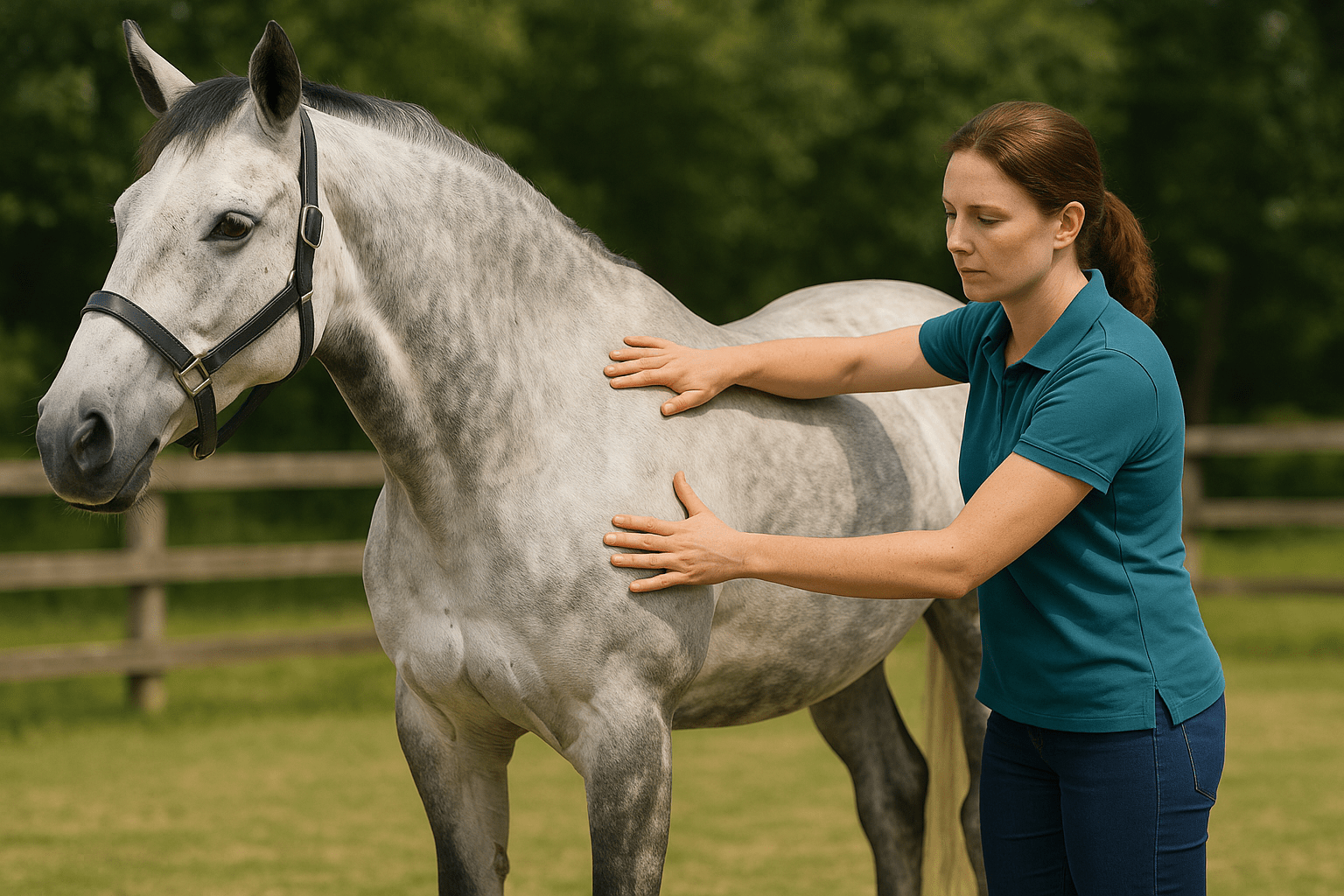
Osteopathy helps optimise posture and core function by restoring freedom of movement, improving joint mobility, and releasing muscular restrictions that prevent proper engagement.
An osteopathic assessment looks at the horse as a whole — not just the area that seems tight or uneven. By gently mobilising the spine, pelvis, and ribcage, osteopathy helps the horse regain natural alignment and balance, allowing the core to activate effectively.
Some of the ways osteopathic treatment supports posture and core stability include:
- Improving flexibility through the thoracolumbar and sacral regions
- Balancing tension in the deep and superficial muscles
- Enhancing coordination between the back and hindquarters
- Encouraging correct posture during movement and rest
- Supporting the nervous system to improve proprioception and control
Horses often show immediate postural improvement after treatment, standing more squarely and moving with increased freedom through the back.
Building and Maintaining Core Strength
While osteopathy helps restore balance and mobility, long-term improvement also depends on appropriate exercise and management. Core strength develops through controlled, thoughtful movement — not speed or intensity.
Some effective ways to build your horse’s core include but are not limited to:
- Pole work and raised walk poles — encourages flexion and coordination
- Hill work — naturally strengthens the hindquarters and abdominal muscles
- Long and low work — promotes correct stretching of the topline
- In-hand exercises and baited stretches — engage deep stabilising muscles
- Transitions and lateral work — improve suppleness and balance
Suitability of the above exercises will depend on your horse’s health and any underlying conditions. Regular check-ins with your osteopath can ensure your horse remains in balance as training progresses, preventing small imbalances from becoming compensatory issues.
A Holistic Approach to Postural Health
Posture isn’t just a physical attribute — it’s a reflection of how the whole body functions and feels. Discomfort, tension, poor saddle fit, dental issues, or even stress can all affect how a horse carries itself. That’s why osteopathic care focuses on the whole horse, addressing both structural and functional imbalances to support overall wellbeing and works alongside other professionals to optimise the health and function of the horse..
When the spine, joints, and soft tissues are free to move as intended, the horse can build strength evenly, use its core effectively, and perform with greater confidence and ease.
Supporting Strength, Balance, and Longevity
Good posture and core stability are essential not only for performance horses but for every equine companion. They form the foundation for healthy movement, injury prevention, and long-term soundness.
Osteopathy offers a gentle yet powerful way to support this foundation — improving comfort, mobility, and balance so your horse can move with the natural strength and grace that nature intended.
 New Forest Animal Osteopathy