
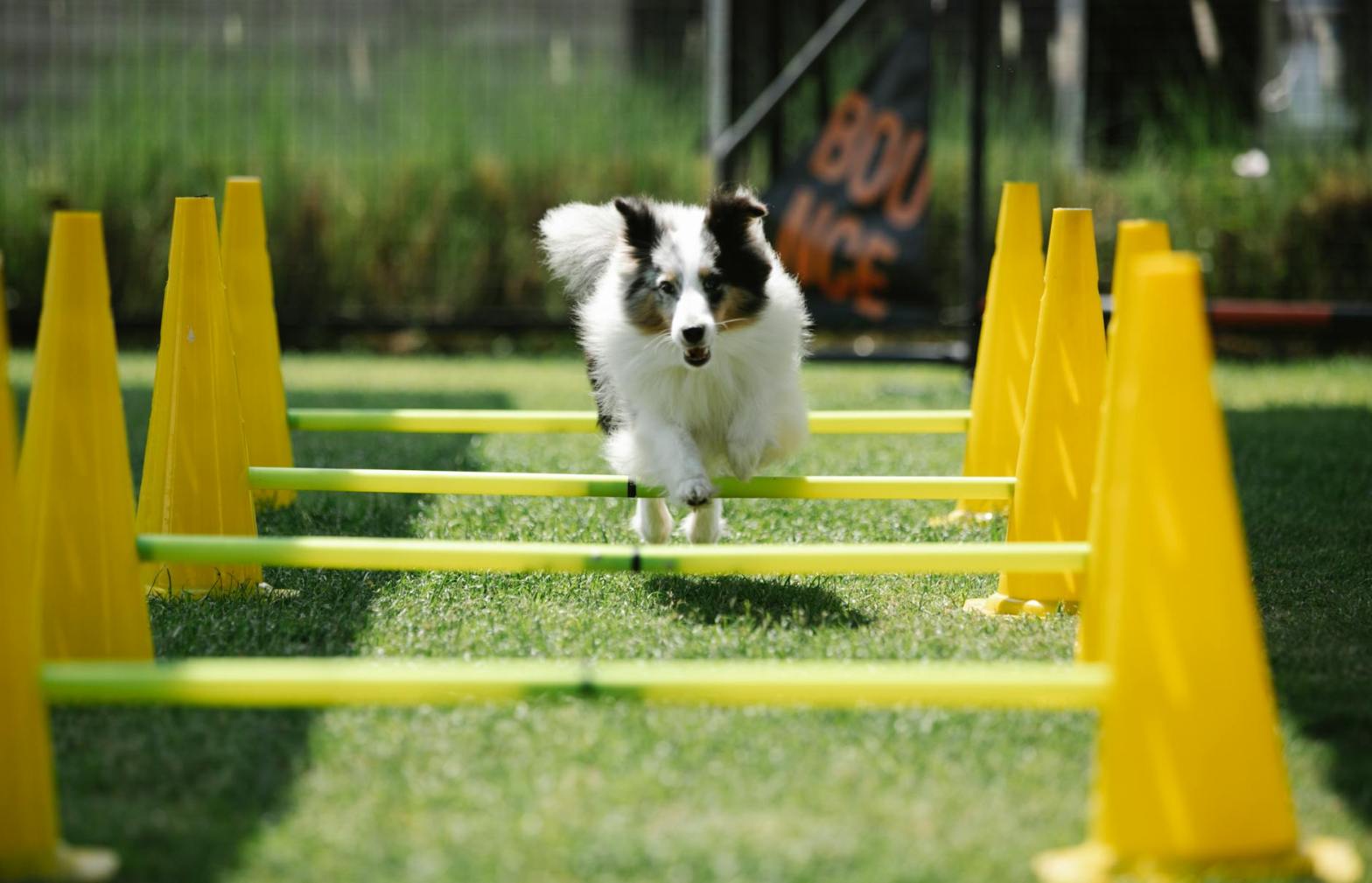
Whether it’s the precision of an agility course, the endurance of a gun dog in the field, or the focus of a search-and-rescue dog, athletic and working dogs push their bodies to perform at an exceptional level. These dogs are highly skilled, motivated, and physically capable — but like any athlete, they’re also prone to strain, imbalance, and overuse injuries.
Osteopathy offers a gentle, effective way to keep these dogs moving at their best, helping them recover, maintain performance, and prevent long-term injury.
The Demands of an Active Working Life
Athletic and working dogs place significant demands on their musculoskeletal systems. Each activity challenges the body in unique ways:
- Agility dogs need flexibility, explosive power, and quick directional changes.
- Gun dogs require stamina, strength, and repetitive retrieving movements.
- Police and military dogs face heavy workloads, jumping, climbing, and unpredictable physical stress.
- Herding dogs rely on agility, coordination, and balance over uneven terrain.
- Canine athletes in flyball, exert high-intensity bursts of energy on joints and soft tissues.
Over time, these repetitive forces can create asymmetries, micro-strains, and compensations that affect movement efficiency and increase the risk of injury.
The Role of Osteopathy in Canine Performance
Osteopathy focuses on the interrelationship between structure and function — meaning that when the body moves freely and in balance, it performs at its best. Through detailed observation and palpation, an osteopath can identify areas of restriction or imbalance before they become problems.
Osteopathic treatment supports the canine athlete by:
- Improving flexibility and range of motion in joints and muscles
- Enhancing coordination and balance, helping dogs move efficiently and reduce fatigue
- Relieving tension and muscular tightness caused by repetitive training
- Supporting recovery between training sessions or competitions
- Promoting circulation and lymphatic drainage, aiding tissue repair and reducing inflammation
When the body functions as a balanced whole, the dog can perform movements with less effort, more precision, and greater longevity.
Early Signs of Strain or Imbalance
Athletic dogs are often so driven that they mask discomfort until it becomes significant. Owners and handlers should watch for subtle signs that may indicate musculoskeletal tension or restriction, such as:
- A shortened stride or reduced flexibility during turns or jumps
- Reluctance to stretch, jump, or climb
- Slower times or reduced endurance
- Changes in behaviour — reluctance to train, irritability, or distraction
- Uneven muscle development or loss of topline
- Stiffness after rest or slower recovery after work
Early intervention with osteopathy can prevent these small issues from developing into performance-limiting injuries.
Osteopathy as Part of a Conditioning Program
For canine athletes, osteopathy is not only about treating problems — it’s about maintaining the body in optimal condition throughout the training cycle.
Regular osteopathic check-ups can help ensure:
- Balanced muscle use between left and right sides
- Correct joint mobility and alignment
- Early detection of compensatory patterns
- Faster recovery after competition or intense training
- Reduced risk of repetitive strain injuries
For working dogs, maintaining this balance also improves endurance, focus, and reliability — helping them perform safely and comfortably even under demanding conditions.
A Team Approach to Performance Care
Osteopathy integrates naturally within a multidisciplinary care team. Collaboration between the vet, osteopath, physiotherapist, and handler ensures that every aspect of the dog’s physical and mental wellbeing is supported.
Osteopathy complements strength and conditioning work, hydrotherapy, and massage, helping refine movement quality and reduce the load on vulnerable joints or tissues.
By promoting overall balance and resilience, osteopathy helps these dogs stay strong, supple, and adaptable — essential traits for any canine athlete.
Helping Dogs Perform at Their Best
The best athletes don’t just train hard. They recover well, move efficiently, and maintain balance throughout their body. The same is true for our dogs.
Osteopathy provides a gentle, hands-on way to support their physical integrity, helping them move freely, stay comfortable, and perform confidently in their work or sport. Whether your dog competes at top level or simply enjoys an active lifestyle, regular osteopathic care can make all the difference — keeping them strong, agile, and happy in every stride.
 New Forest Animal Osteopathy