
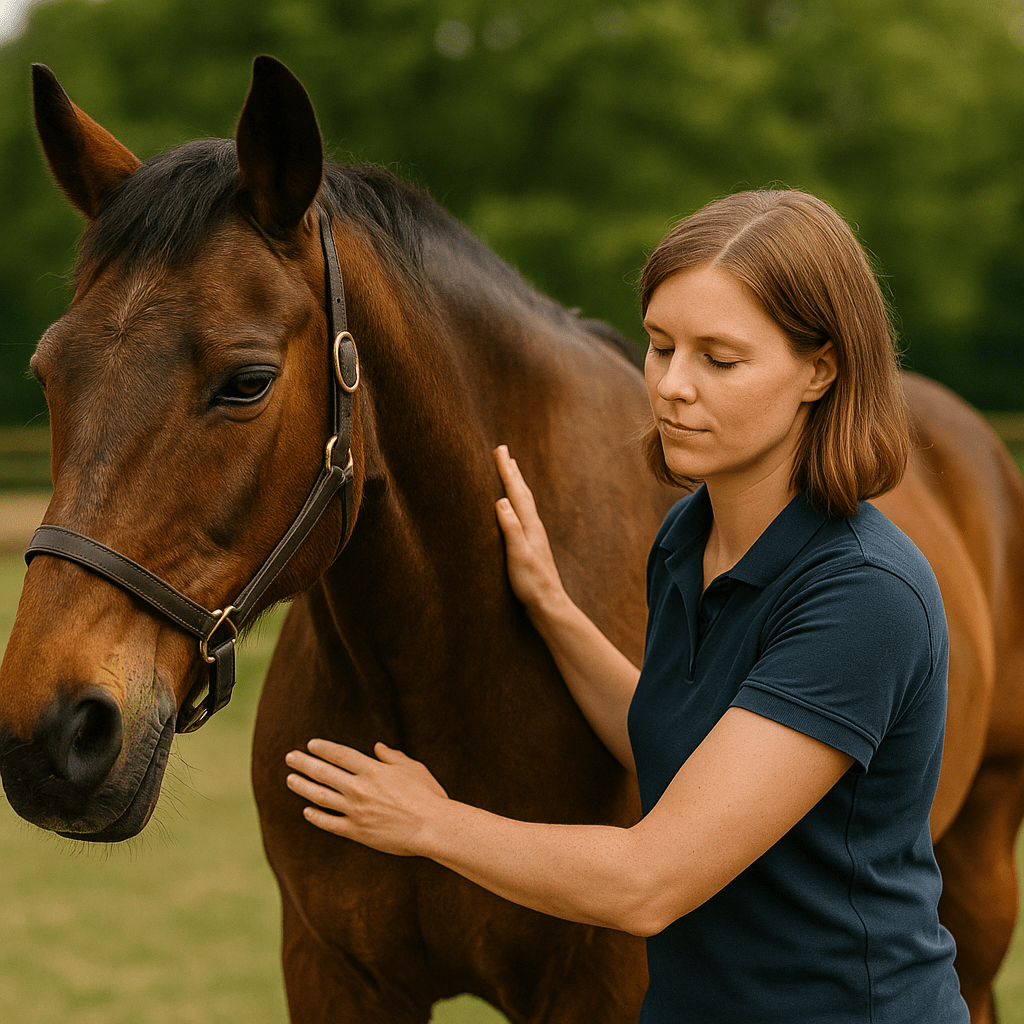
Our horses give us so much over the years — long rides, companionship, and countless memories. As they grow older, their needs evolve, and so does the care we give them. Subtle stiffness, a little loss of topline, or reluctance to pick up a lead may seem like normal signs of ageing, but often these are gentle reminders that the body is adapting to long-term wear and tear.
Osteopathy offers a safe, gentle, and effective way to support older horses, helping them stay comfortable, supple, and content throughout their senior years.
The Ageing Equine Body
With age, the equine musculoskeletal system naturally changes. Joint cartilage wears down, muscles lose some elasticity, and tendons and ligaments may become less resilient. Circulation and lymphatic flow can also slow, making recovery from exertion or small knocks take longer.
Add to that a lifetime of training, minor injuries, saddle pressure, or compensation from conformation — and it’s easy to see why many senior horses start to move differently. The goal of osteopathic care isn’t to make them feel young again, but to help their body adapt and function as freely as possible within its current limits.
How Osteopathy Can Help
Equine osteopathy works by gently improving mobility, balance, and circulation throughout the horse’s body. Through careful assessment and hands-on treatment, the osteopath aims to ease areas of restriction, reduce muscular tension, and support the body’s natural ability to maintain harmony.
For senior horses, this might mean:
- Improving flexibility in stiff joints or tight muscles
- Enhancing comfort under saddle or during groundwork
- Supporting balance and coordination, reducing the risk of slips or uneven loading
- Aiding circulation and lymphatic flow, which helps reduce swelling and stiffness
- Promoting relaxation and wellbeing, both physically and mentally
Older horses often respond beautifully to gentle osteopathic work — even small improvements in mobility can make a noticeable difference in how they move, graze, and interact.
Common Signs Your Older Horse May Benefit
Owners know their horses best, and the earliest signs of discomfort are often subtle. You might notice:
- A shorter stride, especially behind
- Reluctance to bend, canter, or pick up a particular lead
- Hollowing the back or resistance to being tacked up
- Uneven wear on shoes or hooves
- A stiffer neck when ridden, in-hand or grazing
- Behavioural changes such as irritability or loss of enthusiasm for work
These changes don’t necessarily mean anything serious is wrong, but they do suggest that the horse is compensating somewhere — a pattern osteopathic treatment can often help unravel.
A Gentle, Whole-Body Approach
One of the key principles of osteopathy is that the body functions as an integrated whole. A horse with stiffness in the hocks may overuse the shoulders; a sore poll may lead to tension through the neck and back; even digestive or dental issues can influence posture and movement patterns.
An equine osteopath uses observation, palpation, and gentle manual techniques to assess how each part of the body relates to the whole. Treatment might include soft tissue release, rhythmic joint articulation, or subtle cranial or fascial work — always within the horse’s comfort. The aim is to restore ease and balance rather than force change.
Part of a Team Approach
In the UK, veterinary consent is required before remedial osteopathic treatment, ensuring your horse receives care that complements their medical management. Osteopaths frequently work alongside vets, farriers, saddlers, trainers, behaviourists and physiotherapists to support every aspect of the horse’s wellbeing.
In cases of arthritis or chronic conditions, osteopathy can work hand-in-hand with veterinary medication and appropriate exercise programs — helping maintain comfort, fluidity, and a positive outlook.
Supporting Quality of Life
One of the most rewarding things for owners is seeing their older horse regain the ability to move with freedom and confidence. It might be as simple as walking out with more energy, rolling more easily in the field, or standing more squarely when eating.
With regular osteopathic check-ins, careful management, and gentle exercise, many senior horses continue to enjoy an active, fulfilling life well into their later years. Osteopathy doesn’t fight the ageing process — it supports it, keeping your horse comfortable in their body and content in their mind.
 New Forest Animal Osteopathy