
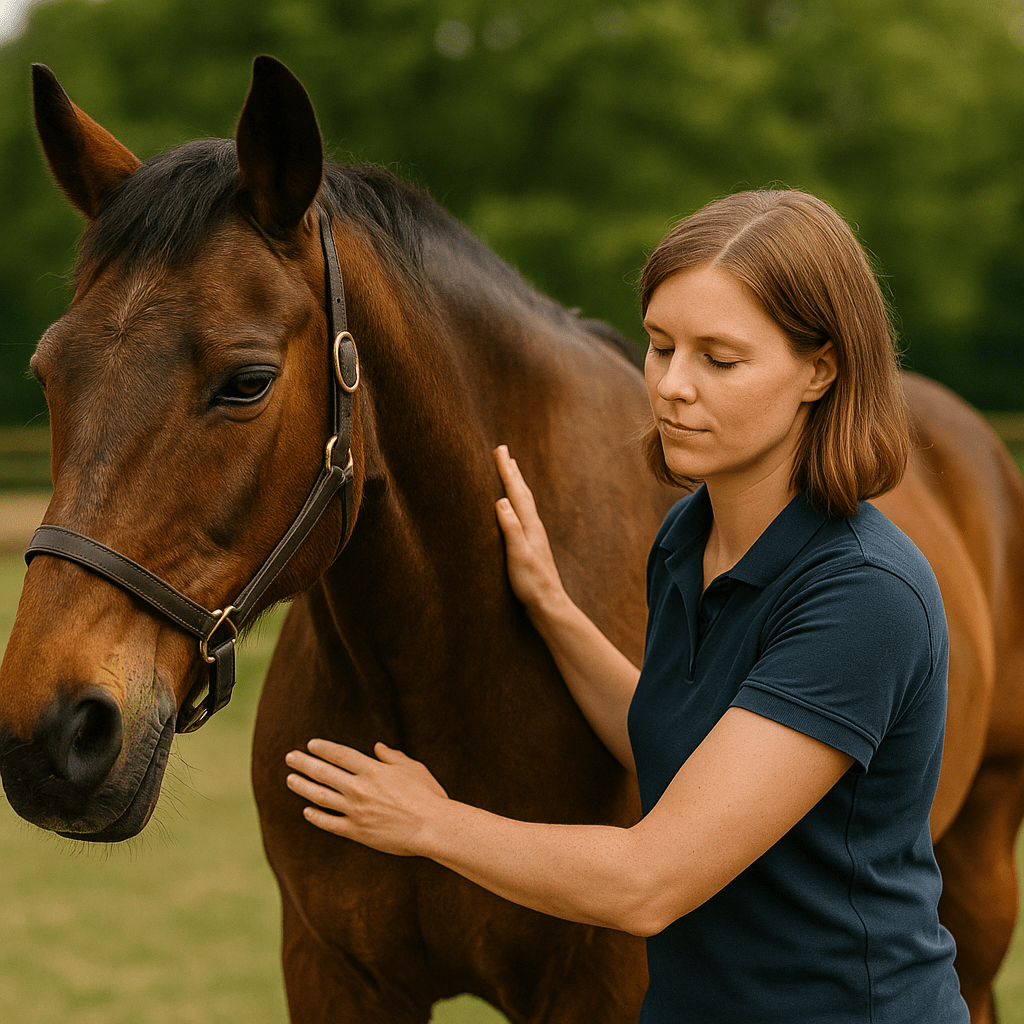
As horses age, their care needs change due to natural musculoskeletal deterioration. Osteopathy provides gentle support, improving mobility, balance, and overall wellbeing for senior horses. Signs of discomfort include shorter strides and reluctance to bend. Regular osteopathic treatment enhances comfort, allowing older horses to maintain an active, fulfilling life.
Author Archives: Herdwick & Goose Limited
Equine Laminitis part 3 (of 3) : Diagnosis, Treatment, Management and Prevention
This post is the last in this Laminitis series and looks at diagnosis, treatment, management and prevention of Laminitis Diagnosing Laminitis Laminitis is usually diagnosed using the clinical signs however x-rays may be taken to confirm whether there has been and rotation of the pedal (coffin) bone. Blood tests may also be undertaken to assessContinue reading “Equine Laminitis part 3 (of 3) : Diagnosis, Treatment, Management and Prevention”
The importance of allowing your dog to sniff
The above TEDEd video helps us to understand how our dogs ‘see the world’ Dog’s don’t have the same vision as us, they don’t see the world the way we do. In fact their noses do a lot of the ‘seeing’ for them. Their damp noses enable them to catch particles of smell on theContinue reading “The importance of allowing your dog to sniff”
Equine Laminitis part 2 (of 3) : Causes and Clinical Signs
This post looks at the term laminitis and the causes and clinical signs the next post will look at diagnosis,treatment and management and prevention What is Laminitis? Laminitis is inflammation of the laminae of the foot. The Laminae is the soft tissue structure attaching the pedal (coffin) bone to the hoof wall. During laminitis, theContinue reading “Equine Laminitis part 2 (of 3) : Causes and Clinical Signs”
Equine Laminitis part 1 (of 3) an introduction:
This post introduces you to the topic of Equine Laminits. Over the next couple of blog posts, we shall look more closely at its, causes, clinical signs, diagnostics and treatment. Did you know that 1 in 10 horses/ponies develop Laminitis each year and that 45% of owners do not recognise their horse’s symptoms as LaminitisContinue reading “Equine Laminitis part 1 (of 3) an introduction:”
Headcollars
I have been working with Olivia Turner B.Sc Hons, Animal Behaviour Consultant & Equine Bitting Specialist since 2015, where has the time gone? Our discussions are always interesting and it’s worth having a read of her guest post on Dr David Marlin’s FB page. As with everything it is how things are used and theContinue reading “Headcollars”
Atypical Myopathy (sycamore myopathy)
Often linked with Autumn and Winter when horses eat the seeds that have fallen onto their pasture, did you know that Atypical myopathy is also prevalent in Spring due to horses eating the germinating seedlings. Seeds and seedlings contain the toxin hypoglycin A (HGA) which slows or stops energy production in muscle and heart MakeContinue reading “Atypical Myopathy (sycamore myopathy)”
Brachycephalic dogs and their owners – a study into health and attachment
Did you know that the French bulldog is now the UK’s most popular breed. In their study titled ‘Great expectations, inconvenient truths, and the paradoxes of the dog-owner relationship for owners of brachycephalic dogs.’ in 2019, Packer RMA; O’Neill DG; Fletcher F; Farnworth MJ from the RVC looked at owners of short-muzzled dogs. They revealedContinue reading “Brachycephalic dogs and their owners – a study into health and attachment”
New diagnostics in Osteoarthritis
RVC have been working in collaboration with other universities to discover more accurate techniques for understanding joint behaviour in osteoarthritis. As an Animal Osteopath, I often work with dogs/horses who have this condition. Treatment, home management and rehabilitation can greatly improve quality of life in these cases. They state: “Osteoarthritis is a condition that causesContinue reading “New diagnostics in Osteoarthritis”
Testing for Neuronal Ceroid Lupofascinosis (NCL) in Salukis
NCL is a severe inherited disease which causes a gradual degeneration of the nervous system. Signs and symptoms vary widely between the forms but generally include a combination of dementia, vision loss and epilepsy. In Salukis, NCL has been observed with progressive signs of lack of coordination from around one year of age (Appleby et al., 1982). ThereContinue reading “Testing for Neuronal Ceroid Lupofascinosis (NCL) in Salukis”
 New Forest Animal Osteopathy